• SUSTAINABLE DESIGN IS NEEDED
    Screenshot

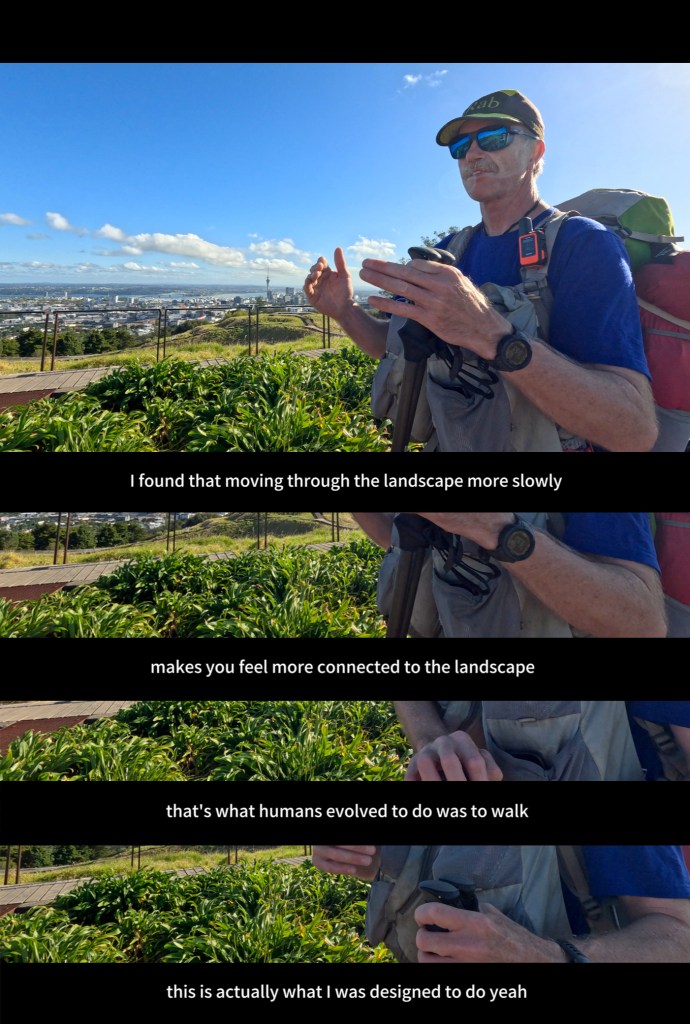
    The photo above is of a challenger I interviewed walking the Te Araroa Trail, a 3,000 km journey stretching from the southernmost (Bluff) to the northernmost (Cape Reinga) tip of New Zealand. He shared many things he learned during his journey.

    First, he said that nature helped him redefine himself. He felt more open and grounded while in nature, encouraging him to do more meaningful things—like helping me with my project by answering my questions. He told me he tries to do things that benefit nature and people. For him, nature is where he finds clarity and a stronger sense of self.

    He was also walking the trail with his daughter. During this journey, they had deep conversations and formed a stronger emotional bond. Nature offered them beautiful landscapes and emotional healing, helping them reconnect and better understand themselves.

    Finally, he told me that the best way to connect with nature is through walking — not by driving or cycling, but by walking. He said that as humans evolved from crawling to walking on two feet, hiking is meaningful and natural to us. He said, “That is what I was designed to do.”

    I completely agree with his perspective. The best way to connect with nature is to return to it. Use your eyes to observe, your legs to explore, your ears to listen, and your actions as an example to protect our natural world. In my design concept, I want to encourage my audience to return to nature and rebuild their relationships with nature. By connecting with nature and finding their sense of belonging, you can be a ‘kaitiaki’ and better protect nature.

  • SUSTAINABLE DESIGN IS NEEDED

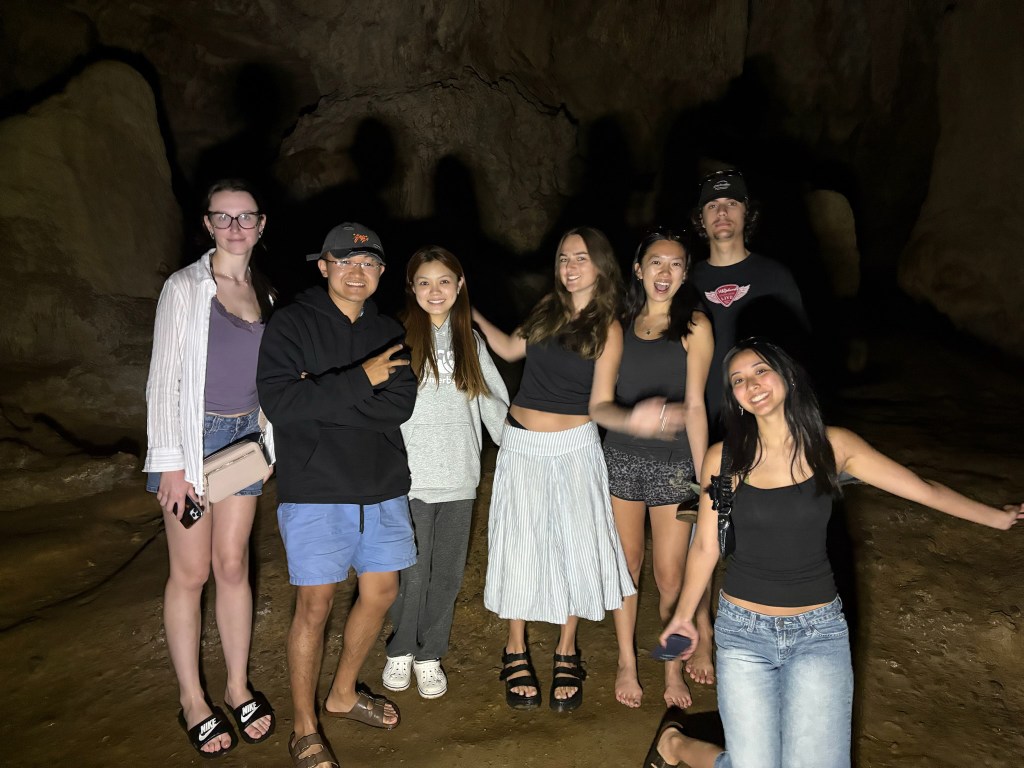
    The photo above was taken during an adventure I organized with my classmates to Waipu Cave. After arriving at our destination, we entered the cave and trekked through a challenging path before finally reaching a chamber filled with glowworms. Along the way, we helped and supported each other, and when we finally saw the glowing lights, it brought us even closer together.


    If the digital age pushes people apart, returning to nature is the solution.

    Let us come together in nature to celebrate the Matariki values of noho tahi (togetherness) and kotahitanga (unity), and to protect our environment through mana taiao (environmental guardianship).

    Through learning, I have understood that in Māori culture, nature is not just a physical environment but a living, breathing force. It is a bridge that links people to each other and the world.


    Nature provides the essential resources for our survival. Working together to access these resources has always drawn people closer. In ancient societies, hunting and gathering were often collective efforts. These collaborative activities naturally strengthened people’s relationships. Even today, in the outdoors, many of our goals can only be achieved through cooperation. Nature has become a space where we build trust and connection with others.


    Nature also creates shared experiences and memories. Outdoor group activities often give us the best opportunities to build relationships. Growing up, I used to go hiking with my classmates almost every weekend. Many of my strongest friendships were formed in nature, and those memories remain vivid and meaningful to me even now.


    One experience I remember deeply happened in my hometown in China. After days of continuous heavy rain, the area was hit by severe flooding. Instead of waiting passively, everyone came together to help—solving problems and supporting those in need. I believe that in the face of natural disasters or hardship, people are more able to unite and build strong bonds through mutual support.


    Outdoor activities are another example. I rarely go camping or have a picnic alone. My friends and I often choose beautiful places in nature to gather. Nature gives us the perfect space for these moments. For instance, sitting with friends and watching a beautiful sunset brings a feeling that is hard to describe — something that brings our souls closer together.


    When meeting someone new, I have found that if we have lived in the same place before, we tend to connect more easily — as if we already share something unspoken. Nature works similarly: it connects us invisibly through the places we have known and loved. I think that is something truly magical.


    That’s why I believe we must return to nature—to find a sense of belonging and to form a deeper relationship with the natural world. We should also protect the environment so that future generations can enjoy the same opportunities to connect with nature.

  • SUSTAINABLE DESIGN IS NEEDED

    As our world grows more urban and digital, it’s easy to forget where we are from and what we were ‘design’ for.  With so many digital and urban distractions, it becomes increasingly difficult to be present to ourselves and the world around us.

    This industrial reality, where technology constantly intrudes upon our senses, alienates us from a natural reality and changes how we experience the world.

    Time to Re connect

    Matariki is a special moment — A time to pause, reflect, and reconnect with the natural world.

    One of my biggest inspirations is the Tūī, a native bird of Aotearoa,New Zealand. I often hear their calls when I’m hiking, and to me, their voice feels like nature calling me home.


    That’s why I chose to study the Tūī — not just for its beauty, but for what it represents: a connection between people and the land.


    Through my design, I want to capture the essence of the Tūī and bring it into fashion — creating a bridge between nature and what we wear.”

    “For me, returning to nature means so much more than just going outside.”
    I fell in love with hiking and the outdoors when I was around ten years old — back when phones were only for calling, not for everything else. Most of my weekends were spent out in the wild with friends. Looking back, those were some of the purest, happiest moments of my life.
    During the week, I’d count down to the weekend — when we’d go climbing, hiking, and challenge oursleves. We’d share food, talk for hours, and build strong relationships between each others.
    Those experiences shaped who I am today.

    But now, things are different. Our connection to nature is fading. Most people spend their time indoors — scrolling through the world instead of walking in it. And for the next generation, it’s even harder. Without access or transportation, many children grow up without ever truly experiencing nature.
    That’s worrying. Urban life is growing fast, but if we don’t slow down, we risk losing something essential.

    That’s why Matariki is so important. It gives us a chance to pause, reflect, and reconnect — with nature, with each other, and with ourselves.
    We need to rebuild our relationship with the natural world. Learn from it. Respect it. Become its kaitiaki — its guardians — not just observers.”

  • SUSTAINABLE DESIGN IS NEEDED

    Matariki: The Māori New Year, It is a significant celebration in New Zealand that marks the beginning of the Māori New Year. Matariki is also known as the Pleiades which rises in midwinter. It’s a time of reflection, renewal, and cultural connection.

    Matariki has it’s special cultural value Including:

    Interview

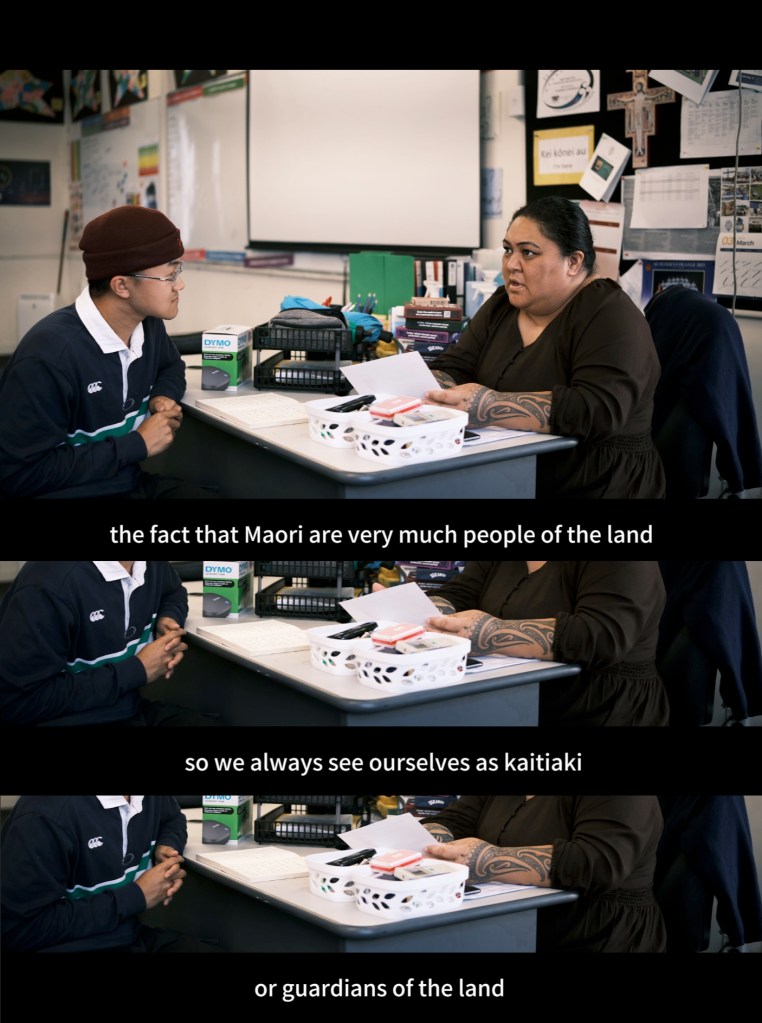
    To gain a deeper understanding of Matariki and ensure cultural respect, I decided to interview my high school Te Reo Māori language teacher – Patracia Tauariki, who has an in-depth knowledge of Māori culture.
    Interview Clips

    “We have a responsibility to not protect it, but to ensure it we leave it as we found it or even in a better condition. That relates to the greenery, plants or waterways” said Patricia Tauariki.

    The concept of ‘Kaitiaki’ emphasizes the intrinsic link between people and the environment, viewing humans as part of te taiao (the environment) and managing relationships accordingly.

    Patricia also introduced me that in Māori culture, the relationship between individuals and nature, family (whānau), and tribe (iwi) is deeply intertwined. Māori people define their identity and sense of belonging through their connection to specific natural landmarks such as mountains and rivers. “Everyone has a profile or moutain that they connect to, for them it is a sense of belongning. When we don’t have these we struggle to find who we are as a people”

  • SUSTAINABLE DESIGN IS NEEDED

    To Make Difference

    Welcome to St.y.k Design Webp!

    Nihao! I am a design student majoring in Fashion and Industrial Design at Auckland University of Technology (AUT). I am dedicated to integrating creativity with sustainability principles in my design projects. On this website, you will see how I combine functionality and sustainability to create practical and eco-friendly products. Design is not only about pursuing aesthetic beauty but also about taking responsibility for the environment and society.

    Design Philosophy

    • Long Lasting: I strive to design products that can withstand the test of time, reducing waste from frequent replacements.
    • Recyclability: During the design process, I prioritize using recyclable materials to ensure that products can be reintegrated into the resource cycle after their lifecycle.
    • Circular Economy: My designs aim to promote the recycling of resources, reduce dependence on natural resources, and drive sustainable development. Turn the end of the product to raw materials.

    Overall

    I am passionate about design and enjoy exploring new materials and technologies to achieve more sustainable and efficient design solutions. Create a better future for our planet through innovation and sustainable design.

    I hope my website conveys my passion for design and my commitment to sustainability. If you are interested in my work or have any ideas or suggestions, feel free to contact me.

    Thank you for visiting, and let us work together 4A better